
Program Details
Evaluation Pathways Initiative: Fostering Equity in the Field of Evaluation
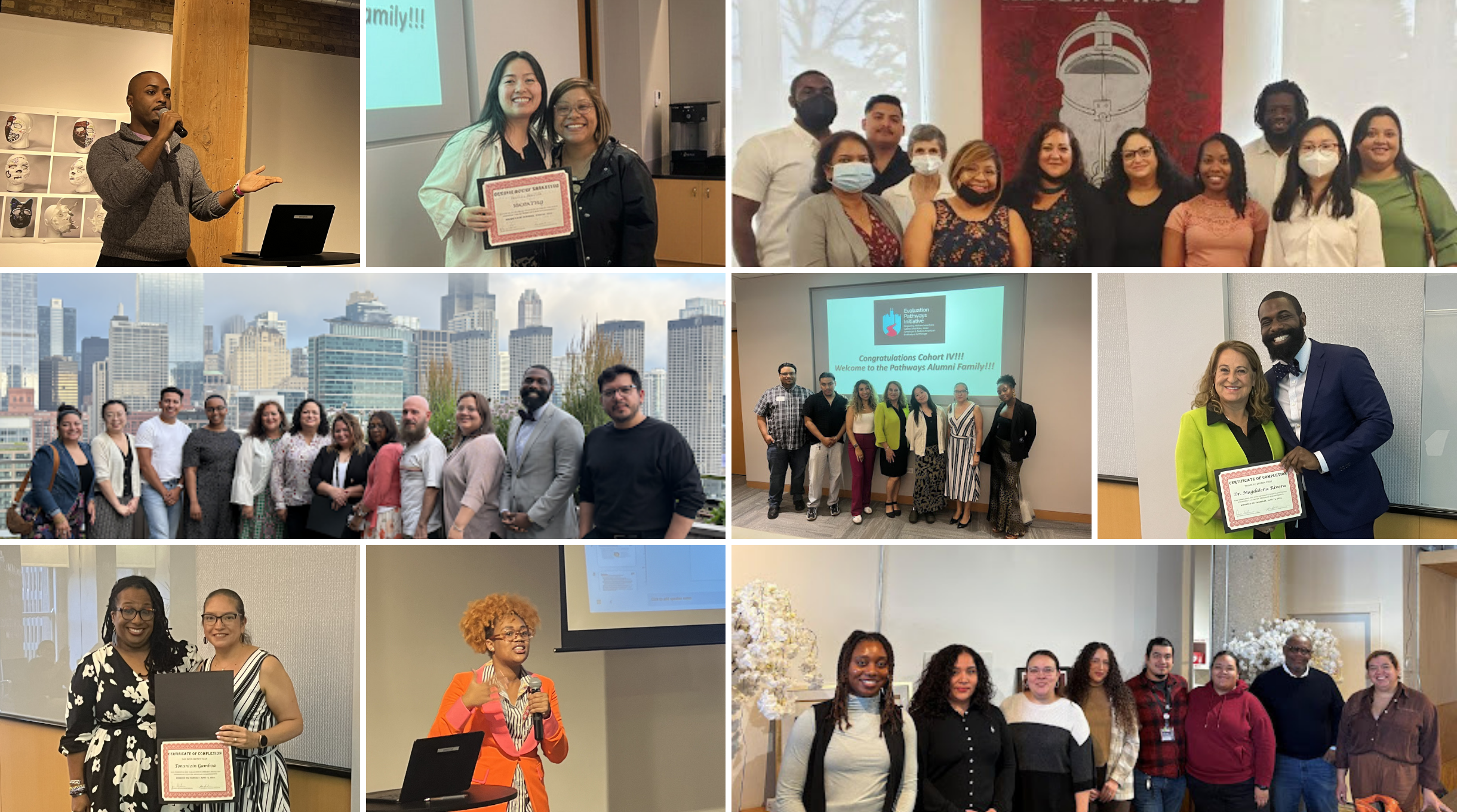
What is the Evaluation Pathways Initiative?
The Evaluation Pathways Initiative (Pathways) is a program designed to strengthen the diversity of the Chicago area evaluation field by increasing the recruitment and training of culturally responsive and equity-focused evaluators of color. Pathways offers an Emerging Evaluator Program that includes the following evaluation topics: culturally responsive evaluation, community engagement, and evaluation methods and analysis. A major part of the training is the use of culturally responsive evaluation to promote diversity, equity, and inclusion.
The program includes:
-
Six 3-hour sessions. The professional learning sessions taught by local university faculty and/or seasoned evaluators. The sessions will focus on further developing participants’ knowledge of the field, explore multiple conceptual frameworks, and examine the social and political contexts that shape evaluation practice. Participants will also sharpen their skills in using evaluation to support their organizations and promote justice and equity.
The first session will be held in person from 9 AM to 12 PM. Sessions 2 through 6 will be held virtually from 9 AM to 12 PM.
-
Following the evaluation training workshop series, participants who wish to earn an evaluation certification will need to complete an evaluation project that is of interest to them and/or their organizations. Participants will work one-on-one with a seasoned evaluator for two months to guide them through this process. Participants must attend five of the six 3-hour evaluation learning sessions to be eligible for project-based coaching. Participants will then need to deliver their final presentations at the graduation ceremony. Participants will receive their program certificates after delivering their final evaluation project presentations and program reflections.
What does the Emerging Evaluator Program Include?
The program includes the following evaluation topics: culturally responsive evaluation, community engagement, and evaluation methods and analysis. A major thrust of the training is the use of culturally responsive evaluation to promote diversity, equity, and inclusion.
Who is Eligible to Apply to the Pathways Emerging Evaluator Program:
-
The application is open to evaluators of color who reflect the full scope of the Chicago region’s diversity including but not limited to individuals who identify as: African American/Black; Latina/o/x/e; American Indian or Alaska Native; Asian American; Middle Eastern or North African; Native Hawaiian or Pacific Islander; and/or multi-racial (ALANA). In addition, applicants must be individuals who are providing evaluation and data support to their organizations, but have not received formal evaluation training, or have only received minimal training.
-
Applicants must be sponsored by their organization. Each participant must identify a sponsor in a supervisory role at their organization to ensure that the participant and their evaluation work is supported by the organization. This means that a supervisor at their organization must agree to provide the participant time to prepare for and attend all 6 workshops. For anyone engaging in the coaching component, the supervisor must also provide time and support for the participant to engage with the evaluation coach to address a project within their organization. Supporting evaluation work with guided coaching requires organizations to give consent for the participant to use data and other information related to an existing evaluation project in order to expand the participant’s learning. This also means that the organization consents for the coach to access the project data and any relevant information in order to support the participant.
-
Applicants must be able to attend five of the six evaluation workshop sessions and complete all preparation for all six sessions (approximately two hours of preparation/week) in order to complete the program and be eligible for coaching support. Coaching sessions are focused on providing guidance on the evaluation project. Participants must meet with their coaches on a weekly basis and demonstrate progress on their project. Participants who complete the requirements will be eligible to earn the Pathways Initiative Evaluation Certificate.
-
Participants who opt into coaching must commit to completing an evaluation project. Coaching sessions will be used to help guide the participant’s project. Attendance at weekly coaching sessions is part of the Pathways Program requirements.
-
Applicants interested in one-on-one coaching support must identify a current evaluation project that they would like to work on throughout the program engagement. It is not required that participants develop a new project to participate in the program, but may identify an existing well-defined evaluation project. The project may be at any point in the evaluation cycle and does not need to be completed before the end of the program, as the participants may focus on a particular portion of the evaluation project as their requirement for participation. As part of your description of the evaluation project being proposed, applicants must include detailed information for each of the following components:
Project description
Problem being addressed by the project
Population served/targeted
Design
Approach
Data collection methods
Data analysis plan
Timeline.
You also need to provide a description of your goals for this project and what assistance or challenges you anticipate being addressed with your coach. Participants will apply the culturally responsive evaluation practices learned through the workshop series and their coaching sessions to further the goals of their organization.
Sample Evaluation Projects
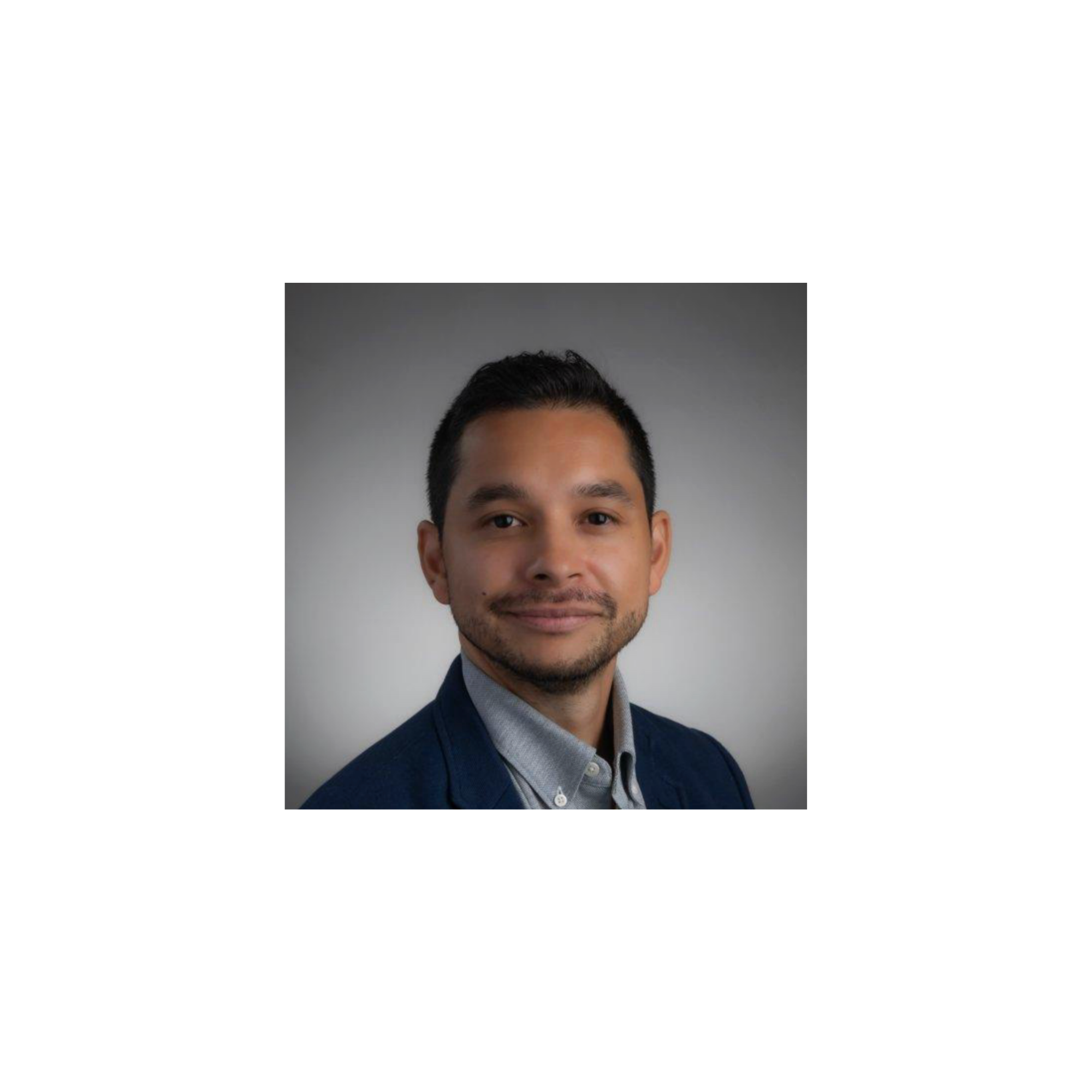


Sergio Anariba
Cohort: V, Fall 2024
Organization: Southland Development Authority
Project: Entrepreneurship Program for Students from Underserved Backgrounds at South Suburban College
Goals and Outcomes: Develop a curriculum and collaborate with curriculum developers to create a specialized program and refine the project’s evaluation framework utilizing culturally responsive evaluation techniques.
James Hall
Cohort: III, Fall 2023
Organization: Chicago Musical Pathways Initiative (CMPI)
Project: Determining the Impact of CMPI’s Mentors on its Students and Parents
Goals and Outcomes: Create a survey and develop a focus group protocol to support the evaluation of the CMPI Mentor program to better understand the commonalities across the wide range of participant’s mentoring experience.
Clarisa Lopez-Ramos
Cohort: V, Fall 2024
Organization: The Puerto Rican Cultural Center (PRCC)
Project: Establish a comprehensive evaluation process to assess employee performance
Goals and Outcomes: Designed an effective performance evaluation framework, feedback techniques, and created a systematic approach for reviewing employee performance in order to provide constructive feedback and foster professional development aligned with the PRCC’s culture and objectives
Kimberly Richardson
Cohort: VII, Fall 2025
Organization: Black Cancer Collaborative
Project: Barriers that are Limiting Women of Color from participating in Clinical Trials
Goals and Outcomes: Completed comprehensive evaluation design with a clear logic model, developed culturally responsive data collection instruments, established stakeholder advisory group with community representation, created data analysis plan and preliminary reporting framework


Paola Torres
Cohort: II, Spring 2023
Organization: University of Illinois Cancer Center
Project: Evaluation of the Illinois Breast and Cervical Cancer Program Outcomes, Successes, and Barriers in its First Year of Implementation
Goals and Outcomes: Develop an evaluation and performance measurement plan, create and disseminate a patient satisfaction survey, refine data management protocols, and plan for dissemination of findings through scientific and/or community reports.
Siqi Wang
Cohort: I, Fall 2022
Organization: Rush University Medical Center
Project: Evaluation of the social impact of SDOH screening at Rush
Goals and Outcomes: Developed and solidified an evaluation plan, created a theory of change for various projects, and re-organized ongoing system-wide SDOH related projects